




I started functional training three years ago. Not because a trainer told me to. Because I threw my back out picking up a suitcase. That moment changed how I think about fitness.
The Functional Strength Exercises I do now are not about looking good in a mirror. They are about moving through life without pain.
Functional strength training builds muscles you actually use. It mimics real movements. Lifting groceries. Climbing stairs. Getting off the floor. This guide breaks down the best exercises, why they work, and how to avoid the mistakes that make them useless.
What Makes Functional Strength Training Different?
Traditional strength training isolates muscles. You work biceps one day. Chest the next. The goal is size and max strength.
Read Also: All the Requirements for an Hourglass Figure in Gym
Functional training works multiple muscles together. It trains movement patterns, not single muscles. A squat works your legs, core, and back. A push-up works your chest, shoulders, and trunk.
The difference matters for daily life. Bench pressing 200 pounds does not help you carry a squirming toddler. A farmer’s carry does.
The Seven Movements Your Body Actually Needs
Every functional exercise falls into one of seven patterns. Train these and you cover everything.
Squat. Getting out of a chair. Picking up something from the floor. The squat is the most basic human movement.
Hinge. Bending at the hips. Picking up a box. Deadlift pattern.
Push. Pushing a door open. Getting up from the ground.
Pull. Pulling a drawer. Carrying bags. Rowing pattern.
Lunge. Walking. Climbing stairs. Single-leg balance.
Carry. Holding groceries. Lugging a suitcase.
Rotation. Twisting to reach something. Swinging a bat. Turning to look behind you.
If your workout hits these seven patterns, you are doing functional training.
The Best Functional Strength Exercises

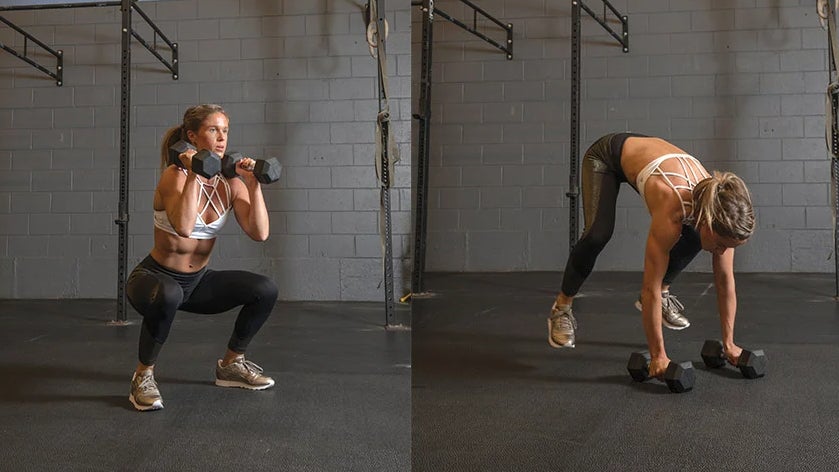
Goblet Squat
Hold a dumbbell or kettlebell at your chest. Squat down. Stand up.
This teaches the squat pattern with a load that does not crush your spine. It also forces your core to work. Your arms hold the weight. Your abs keep you upright.
Do three sets of eight to twelve reps.
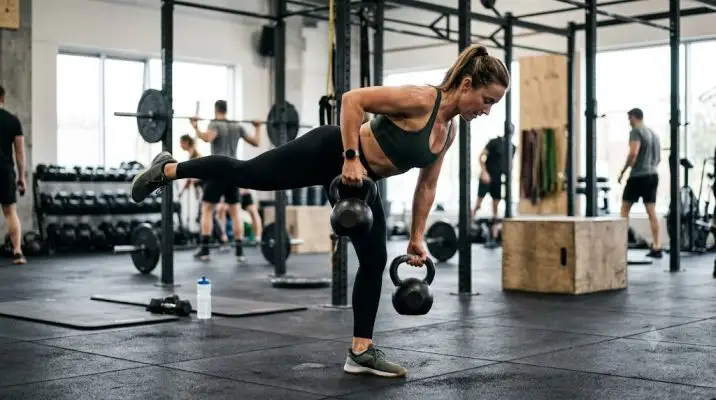
Romanian Deadlift
Hold weights in front of your thighs. Push your hips back. Lower the weights toward your shins. Stand up by squeezing your glutes.
This trains the hinge. It builds hamstrings and glutes. It also teaches you to lift with your legs, not your back .
Do three sets of eight to ten reps.
Farmer’s Carry
Pick up two heavy dumbbells. Walk for distance or time. Keep your shoulders back. Do not let your torso lean.
This is the most underrated functional exercise. It trains grip, core, shoulders, and legs all at once. It mimics carrying groceries or luggage.
Walk for 30 to 60 seconds. Do three to four rounds.
Push-Up
The push-up is a moving plank. It trains your chest, shoulders, triceps, and core. If floor push-ups are too hard, do them on an incline. A wall. A bench. A countertop.
Do three sets of eight to fifteen reps.
Standing Row
Attach a resistance band to a door. Hold the ends. Pull toward your chest. Squeeze your shoulder blades together. This trains the pulling pattern. It counters all the pushing we do at desks and phones .
Do three sets of twelve to fifteen reps.
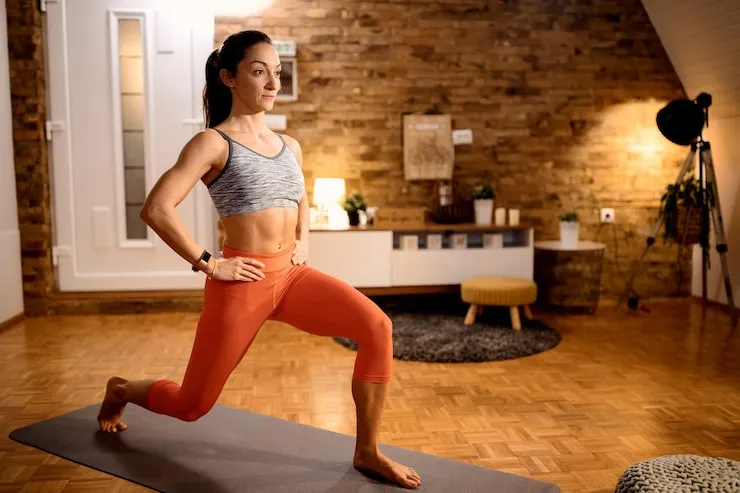
Lunge
Step forward. Lower your back knee toward the floor. Push back to standing.
Lunges train single-leg strength and balance. They mimic walking and climbing stairs. They also expose imbalances between your left and right sides .
Do three sets of eight to ten reps per leg.
Rotation with Resistance Band
Anchor a band at chest height. Stand sideways. Pull the band across your body. Rotate your torso. This trains the twisting motion. It is essential for sports and daily reaching. Most gym routines ignore it.
Do three sets of ten reps per side.
Why These Exercises Beat Traditional Lifting for Daily Life?
Research backs this up. A systematic review of 32 studies found strong evidence that functional training improves activities of daily living in older adults.
You Must Also Like: The Exact Zone 2 Cardio Protocol Peter Attia Uses for Maximum Longevity
The same review found functional training improves physical functioning. Balance. Mobility. Lower body strength. These are the things that keep you independent as you age.
Another study in Nature found high-intensity functional training improved metabolic health and physical performance in overweight men. It reduced fasting blood glucose and triglycerides. It increased VO2max and maximal strength.
Functional training also burns calories. It uses large muscle groups. It elevates heart rate. It creates metabolic stress that continues after the workout.
The Mistakes That Kill Results
Mistake 1: Going too light. Functional training still needs resistance. Bodyweight squats are fine for beginners. But you need to add load to build strength. Use dumbbells, kettlebells, or bands.
Mistake 2: Ignoring progression. You must increase difficulty over time. Add weight. Add reps. Slow down the movement. If you do the same thing for months, your body adapts and stops improving.
Mistake 3: Skipping the warm-up. Functional movements require mobility. Do five minutes of dynamic stretching before you start. Leg swings. Arm circles. Hip openers. This prevents injury and improves performance.
Mistake 4: Training through pain. Muscle fatigue is fine. Joint pain is not. Stop if something hurts. Functional training should reduce pain, not create it.
How to Build a Functional Workout?
You do not need a gym. You do not need fancy equipment. Here is a simple template.
Pick one exercise from each pattern. Squat. Hinge. Push. Pull. Lunge. Carry. Rotation.
Do three sets of each. Eight to twelve reps. Rest 60 seconds between sets.
That is a complete functional workout. It takes 30 to 40 minutes. Do it two to three times per week .
Who Should Do Functional Strength Exercises?
Everyone. That is the honest answer.
Older adults benefit most. Functional training reduces fall risk. It improves balance and mobility. It helps you stay independent .
Athletes benefit too. Functional training transfers to sport. A golfer needs rotation. A basketball player needs lateral lunges. A runner needs single-leg strength.
Desk workers benefit. Functional training counters sitting. It strengthens the posterior chain. It opens tight hips. It reduces back pain.
The Final Thoughts
Functional strength training is not a trend. It is a return to how humans are supposed to move. Squat. Hinge. Push. Pull. Carry. Rotate. Train these patterns. Add resistance over time. Warm up before you start. Stop if it hurts.
The result is a body that works as well as it looks. You will pick up your kids without wincing. You will climb stairs without gasping. You will get off the floor without using your hands.
That is functional fitness. That is the point.