




Your breath connects directly to your nervous system. You can shift your state in minutes. I have experienced this firsthand. Three minutes of slow breathing drops my heart rate. My mind settles. Stress fades away.
Modern research backs what ancient yogis discovered. Controlled yogic breathing regulates your autonomic nervous system through clear mechanisms. It moves you from fight-or-flight to rest-and-digest. This is measurable physiology, not wishful thinking.
Your Nervous System Explained Simply
Your autonomic nervous system has two parts. The sympathetic system triggers fight-or-flight. It prepares you for danger. The parasympathetic system promotes rest and recovery. It helps your body heal.
Read Also: What Is Somatic Yoga? Benefits, Poses And Healing Guide
Many people live in sympathetic overdrive. Daily stress keeps that system running. Shallow, rapid breathing makes it worse. Controlled yogic breathing activates the vagus nerve. That nerve turns on your parasympathetic system. Your heart slows. Your blood pressure drops. Stress hormones decrease.
What Is Controlled Yogic Breathing?
The Sanskrit word is pranayama. Prana means life force. Yama means control. So pranayama means life force control. Modern science views it as intentional breath regulation.
Different methods produce different effects. Some calm you down. Others energize you. The key is controlling your inhale, exhale, and breath holds.
How It Actually Works?
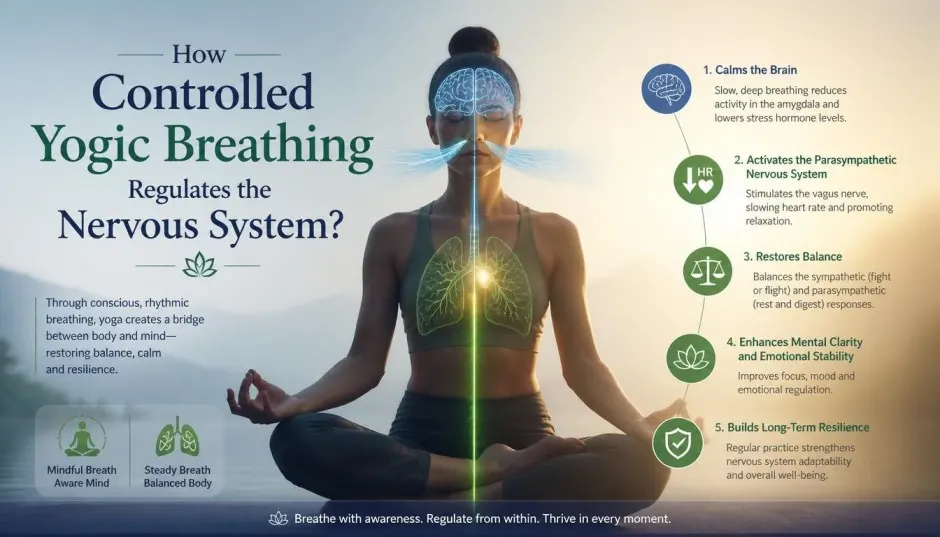
1. Vagus Nerve Activation
The vagus nerve runs from your brainstem to your belly. It is your parasympathetic superhighway. Slow, deep breathing directly stimulates it. This triggers your relaxation response. Your body enters a healing state.
I tested this myself. After tough meetings, I do five minutes of slow breathing. My shoulders drop. My jaw unclenches. Tension dissolves. That is your vagus nerve doing its job.
2. Heart Rate Variability Improves
Heart rate variability measures the time between heartbeats. Higher variability means better nervous system balance. Your body handles stress more effectively.
Controlled yogic breathing boosts HRV consistently. Studies confirm this repeatedly. Alternate nostril breathing and slow breathing both work. This is a solid marker of nervous system health.
3. Blood Pressure and Heart Rate Drop
Multiple studies show blood pressure reduction after pranayama. Slow Bhastrika lowers both systolic and diastolic readings. Sheetali produces similar effects. Heart rate decreases by about 8% with regular practice.
Why? Sympathetic activity declines. Blood vessels relax. Your heart works less hard.
4. Brain Activity Changes
Controlled slow breathing increases oxygenated blood flow to your prefrontal cortex. That is your decision-making and focus center. Alternate nostril breathing triggers this effect.
You Must Also Like: Yoga Meditation for Sleep and Relaxation
I notice this during my morning practice. My thinking sharpens. My focus improves. Difficult tasks feel manageable.
5. Breathing Rate Slows
Your breathing rate drops during controlled practice. Slow breathing at 5 to 6 breaths per minute is common. This slower rhythm creates a calming loop. Your body interprets slow breathing as safety.
Seven Pranayama Techniques
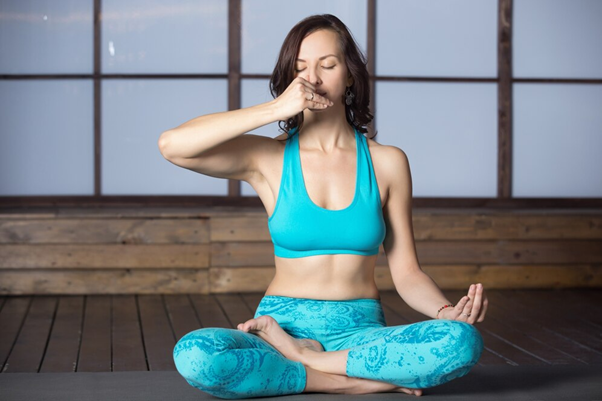
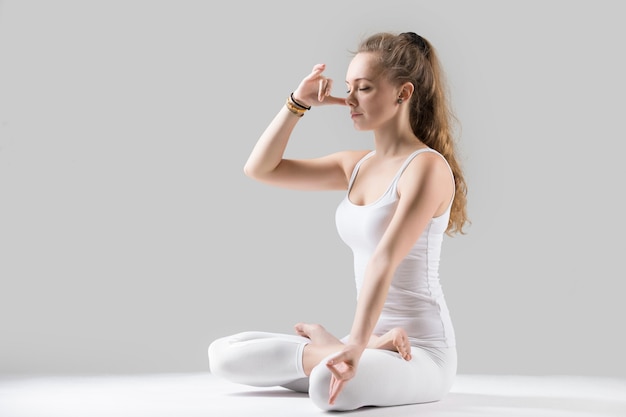
1. Nadi Shodhana (Alternate Nostril Breathing)
This balances both brain hemispheres. You breathe through one nostril at a time. Research shows it increases prefrontal cortex blood flow. It calms your mind and improves focus.
How to do it: Sit comfortably. Close your right nostril with your thumb. Inhale through your left. Close your left. Exhale through your right. Repeat for 5 minutes.
Best for: Anxiety and scattered thinking.
2. Bhramari (Humming Bee Breath)
You hum during exhalation. The vibration stimulates your vagus nerve. It also increases nitric oxide production. That relaxes blood vessels. A systematic review confirms its positive effects.
How to do it: Close your eyes. Inhale deeply. Exhale while humming like a bee. Feel the vibration in your head and chest.
Best for: Clearing your head and reducing stress.
3. Ujjayi (Victorious Breath)
You slightly constrict your throat during breathing. This creates a soft hissing sound. It warms your body and increases oxygen absorption. It also regulates breath during yoga.
How to do it: Gently tighten the back of your throat. Breathe through your nose. You should hear a soft ocean sound.
Best for: Building focus and internal heat.
4. Bhastrika (Bellows Breath)
This energizes you. You exhale and inhale forcefully and rapidly. It briefly increases sympathetic arousal. But afterward, your body relaxes more deeply.
How to do it: Inhale and exhale forcefully through your nose. Do 25 rapid breaths. Rest. Repeat.
Best for: Morning energy when you feel sluggish.
5. Sheetali (Cooling Breath)
You curl your tongue and inhale through it. This lowers body temperature and reduces blood pressure. Studies confirm significant drops in both systolic and diastolic readings.
How to do it: Roll your tongue into a tube. Inhale through your mouth. Exhale through your nose.
Best for: Cooling down and reducing stress-related heat.
6. Sheetkari (Hissing Breath)
Similar to Sheetali but you clench your teeth. You inhale through the gaps. It also cools your body and reduces inflammation.
How to do it: Clench your teeth together. Inhale through the gaps. Exhale through your nose.
Best for: Managing thirst and indigestion.
7. Suryabhedan (Right Nostril Breathing)
You inhale through your right nostril and exhale through your left. This generates heat. It activates sympathetic arousal. It may help with low blood pressure and rhinitis.
How to do it: Close your left nostril. Inhale through your right. Close your right. Exhale through your left.
Best for: Low energy and sluggish mornings.
What This Means for You?
Controlled yogic breathing regulates your nervous system better than many medications. It costs nothing. It is available anywhere. It has no side effects. But you need to practice consistently.
Even 10 minutes daily produces noticeable results. A systematic review of 11 studies found regular practice improves lung function. It also lowers stress markers. Most participants practiced for 4 weeks to 4 months.
Mistakes I Made Early On
Practicing too fast: Slow breathing calms your nervous system better. Rapid techniques have their place. But for relaxation, slow wins.
Skipping holds: Breath retention enhances vagal stimulation. But do not hold too long. Comfort matters most.
Ignoring exhalation: Extended exhalation triggers relaxation. Make your exhale longer than your inhale.
Pushing too hard: Stop if you feel dizzy. Start with shorter sessions. Build up gradually.
Who Should Be Careful?
Most breathing practices are safe for healthy people. But some need caution.
Pregnancy: Avoid forceful techniques like Bhastrika. Bhramari is generally safe and beneficial.
High blood pressure: Slow techniques like Sheetali work well. Avoid rapid, forceful breaths.
Epilepsy: Talk to your doctor before starting breath retention.
Respiratory conditions: Gentle techniques like Nadi Shodhana are fine. Avoid hyperventilation.
My Experience
I have used these techniques for years. They work consistently. They work when I am stressed. They work when I am anxious. They work when I cannot sleep.
Start with 5 minutes of Nadi Shodhana tomorrow. Pay attention to how you feel afterward. Your nervous system will respond. The science is clear. The experience is real.